Revolt & Aftermath · 10 May 1857
Revolt of 1857
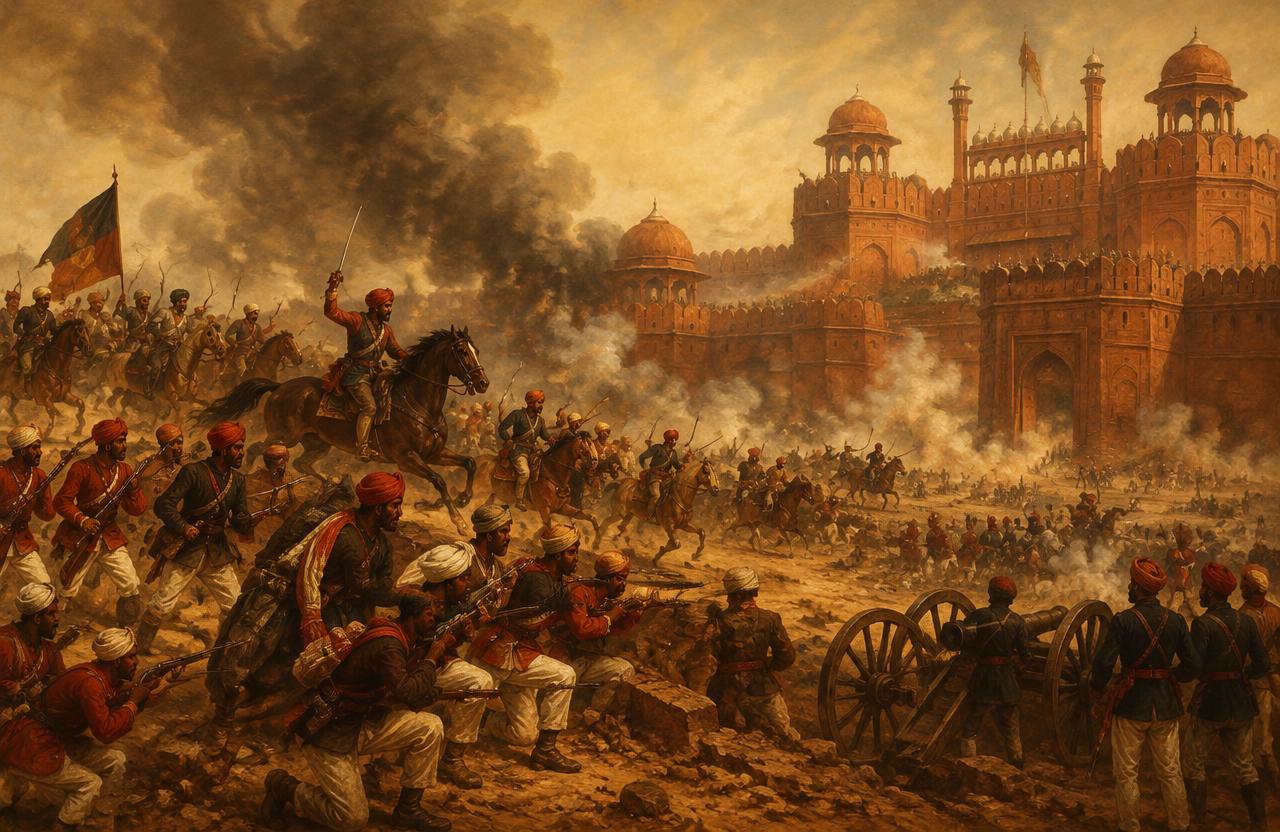
Beginning with sepoys at Meerut, the uprising spread across north and central India. Rebels proclaimed Bahadur Shah Zafar emperor in Delhi before the British crushed it by 1858.
Causes
- Annexations under the Doctrine of Lapse
- Greased cartridges offending religious beliefs
- Heavy land revenue and loss of aristocratic status
- Grievances over sepoy pay and overseas service
Consequences
- End of East India Company rule; Crown takes over (1858)
- Queen's Proclamation promising non-interference in religion
- Reorganisation of the army along divide-and-rule lines
Significance
The first large-scale challenge to British rule, later remembered by nationalists as the First War of Independence.
People
Key terms
Sources
- NCERT, Themes in Indian History Part III, Class XII
- Sekhar Bandyopadhyay, From Plassey to Partition (Orient BlackSwan, 2004)
- V.D. Savarkar, The Indian War of Independence 1857 (1909)