1847–1947
Timeline
1847–1857
Prelude
Annexation, the Doctrine of Lapse and the end of Sikh rule set the stage for revolt.
1848–1849
Second Anglo-Sikh War & Annexation of Punjab
After Ranjit Singh's death the Sikh kingdom weakened. Two wars with the East India Company ended with Punjab's annexation in 1849.
political · regional
1848–1856
Doctrine of Lapse Applied
Governor-General Dalhousie annexed states whose rulers died without a natural heir, including Satara, Jhansi and Nagpur. Awadh was annexed in 1856 on grounds of 'misgovernment'.
political · regional
1857–1885
Revolt & Aftermath
The great uprising, the end of Company rule and the rise of a new educated class.
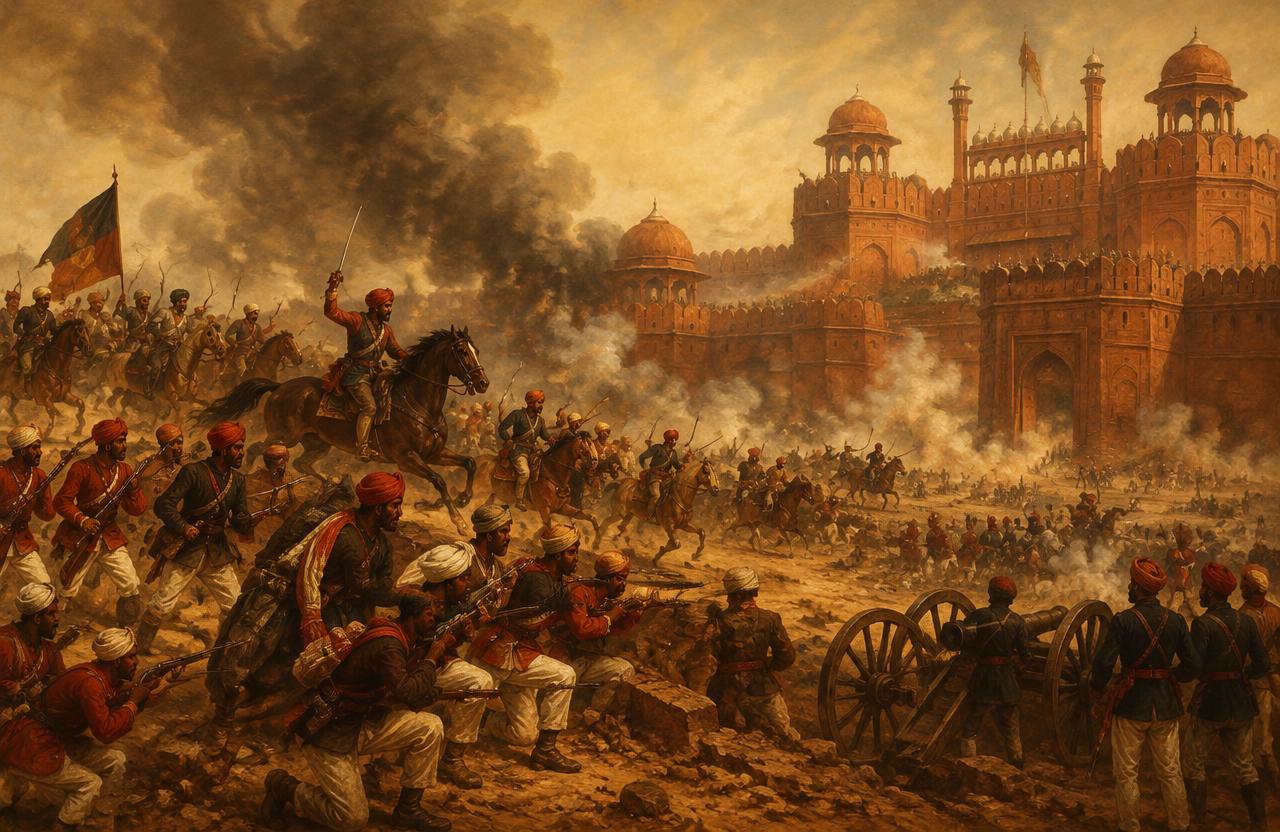
10 May 1857
Revolt of 1857
Beginning with sepoys at Meerut, the uprising spread across north and central India. Rebels proclaimed Bahadur Shah Zafar emperor in Delhi before the British crushed it by 1858.
political · social · regional
1 November 1858
Queen's Proclamation and Crown Rule
After the Revolt, the Government of India Act 1858 ended East India Company rule. Queen Victoria's Proclamation promised religious tolerance and equal treatment.
political
1859–1860
Indigo Revolt
Peasants in Bengal refused to grow indigo for European planters who forced them into unfair contracts. The press and educated Bengalis backed them.
economic · regional · social
1867–1901
Drain of Wealth Theory
Dadabhai Naoroji argued that Britain drained India's wealth through home charges, salaries and trade. His Poverty and Un-British Rule in India appeared in 1901.
economic
1878–1884
Vernacular Press Act and Ilbert Bill Controversy
Lord Lytton's Vernacular Press Act gagged Indian-language newspapers. Then in 1883 Europeans fiercely opposed the Ilbert Bill, which let Indian judges try Europeans.
political
1885–1905
Early Nationalism
The Moderates found the Congress and build the economic critique of empire.
1905–1915
Swadeshi & Extremists
Bengal's partition sparks boycott, mass protest and a sharper nationalism.
16 October 1905
Partition of Bengal
Lord Curzon split Bengal, officially for administration but widely seen as an attempt to divide Hindus and Muslims and weaken Bengali nationalism.
political · regional · economic
1906–1909
Muslim League and Morley-Minto Reforms
The All-India Muslim League was founded at Dhaka in 1906. The Indian Councils Act 1909 then gave Muslims separate electorates.
political · social
December 1907
Surat Split
At its Surat session, the Congress split between Moderates, who wanted gradual reform, and Extremists, who demanded Swaraj through boycott and mass action.
political
1916
Lucknow Pact and Home Rule Leagues
Tilak and Annie Besant launched Home Rule Leagues to demand self-government. The same year Congress reunited and signed the Lucknow Pact with the Muslim League.
political
1915–1934
Gandhian Era
Satyagraha turns the struggle into a mass movement of peasants, workers and women.
April 1917
Champaran Satyagraha
Gandhi went to Champaran in Bihar to investigate peasants forced to grow indigo under the 'tinkathia' system. He refused an order to leave and recorded thousands of statements.
economic · regional · social
13 April 1919
Jallianwala Bagh Massacre
General Dyer ordered troops to fire on an unarmed crowd in Amritsar, killing hundreds who had gathered against the Rowlatt Act.
political · regional
March–April 1919
Rowlatt Satyagraha
The Rowlatt Act allowed imprisonment without trial. Gandhi called a nationwide hartal on 6 April 1919 — the first all-India protest.
political
1920–1922
Non-Cooperation Movement
Gandhi launched a nationwide boycott of British courts, schools, councils and cloth, joined with the Khilafat cause. He called it off after the violence at Chauri Chaura.
political · economic · social
4 February 1922
Chauri Chaura Incident
A crowd in Chauri Chaura (Gorakhpur) set fire to a police station after police fired on protesters, killing 22 policemen. Gandhi called off the Non-Cooperation Movement.
political · social
1928
Simon Commission Boycott
An all-British commission came to review India's constitution. Indians greeted it with black flags and 'Simon Go Back'. Lala Lajpat Rai died after a police lathi charge.
political
26 January 1930
Purna Swaraj Declaration
At the Lahore session (December 1929), under Nehru's presidency, the Congress adopted complete independence as its goal and celebrated 26 January 1930 as Independence Day.
political
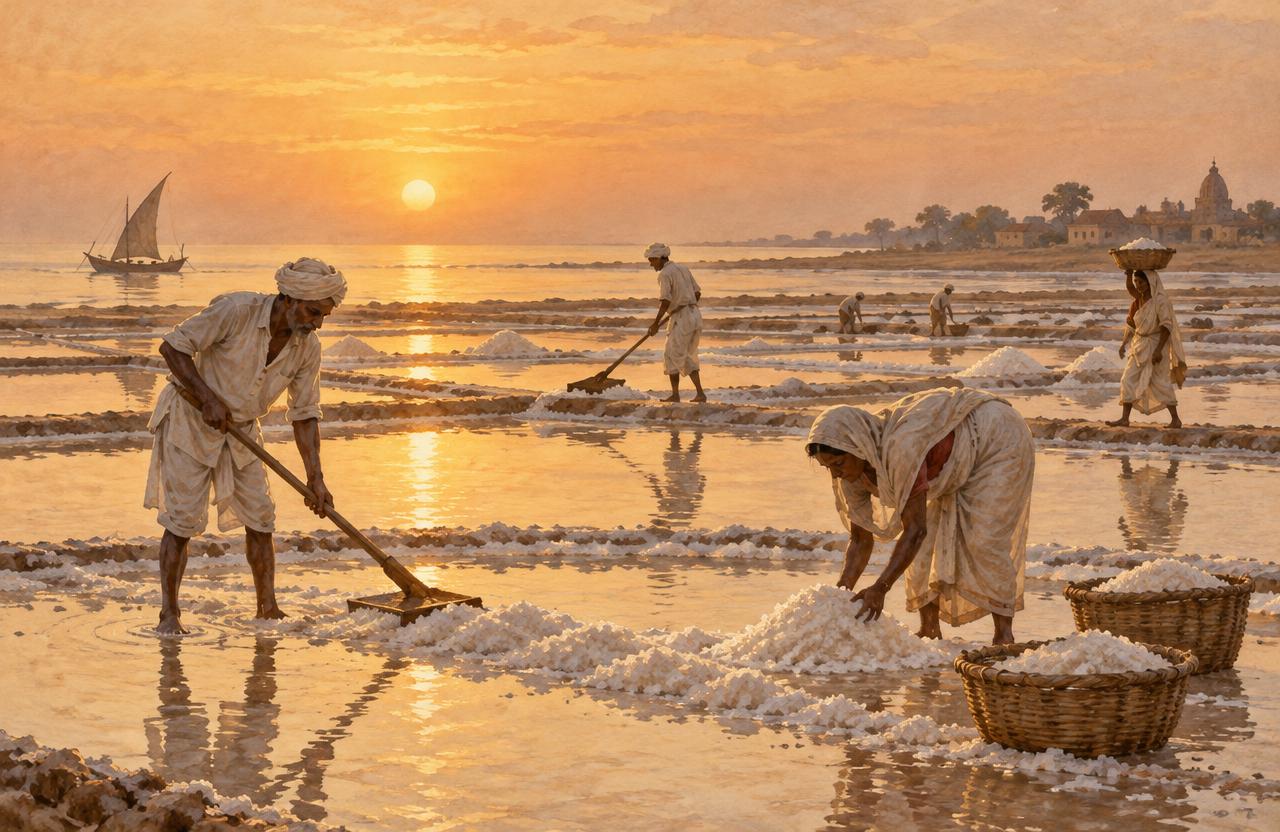
12 March – 6 April 1930
Dandi March
Gandhi walked 385 km from Sabarmati to Dandi and broke the salt law, starting the Civil Disobedience Movement.
political · economic
23 March 1931
Execution of Bhagat Singh, Rajguru and Sukhdev
The three HSRA revolutionaries were hanged in Lahore for the killing of police officer Saunders.
political
1930–1932
Gandhi–Irwin Pact and Round Table Conferences
Britain held three Round Table Conferences in London. Under the Gandhi–Irwin Pact (March 1931), Congress paused Civil Disobedience and Gandhi attended the second conference.
political
24 September 1932
Poona Pact
After Gandhi's fast against separate electorates for Depressed Classes, Ambedkar agreed to reserved seats within joint electorates.
political · social
1935–1939
Towards Autonomy
Provincial elections and Congress ministries test self-government.
2 August 1935
Government of India Act 1935
Introduced provincial autonomy and created new provinces, including Odisha (1 April 1936) and Sind.
political · regional
1937–1939
Congress Ministries
In the 1937 provincial elections, Congress won majorities in most provinces and formed governments. They resigned in 1939 when Britain dragged India into war without consulting Indians.
political
1939–1945
Quit India & War
The Second World War, Quit India and the Indian National Army.
23 March 1940
Lahore Resolution
The Muslim League demanded 'independent states' for Muslim-majority regions in the north-west and east. It became known as the Pakistan Resolution.
political
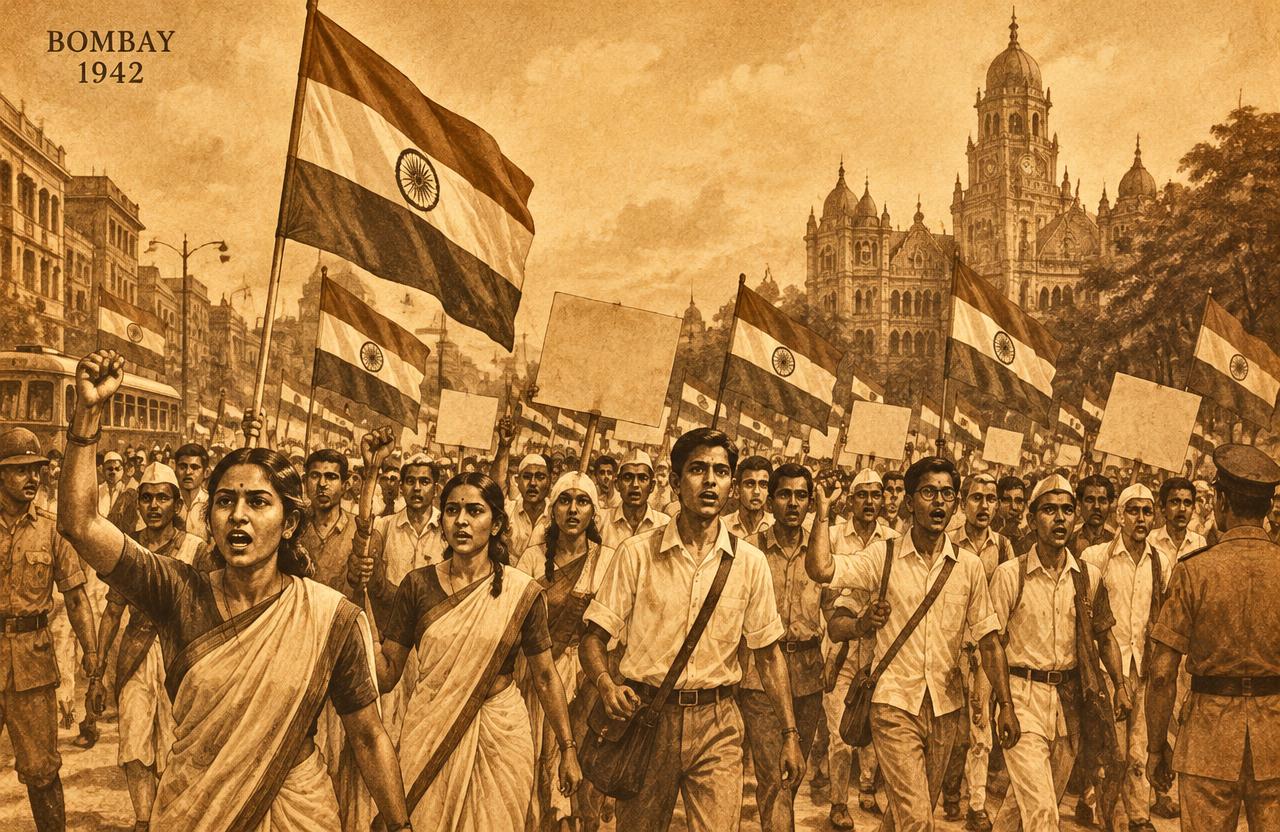
8 August 1942
Quit India Movement
The Congress demanded immediate British withdrawal. Gandhi called on Indians to 'Do or Die'. Leaders were arrested at once and the movement went underground.
political · social
March–April 1942
Cripps Mission
Sir Stafford Cripps offered India dominion status after the war, with provinces allowed to opt out. Congress and the League both rejected it.
political
1943–1945
Azad Hind Government and INA Campaign
Subhas Chandra Bose formed the Provisional Government of Free India in Singapore. The INA fought alongside Japan at Imphal and Kohima in 1944.
political
1945–1947
Independence & Partition
Negotiations, communal violence, and freedom divided.
November 1945
INA Trials
Officers of Bose's Indian National Army were tried at the Red Fort, prompting nationwide protest.
political
March–June 1946
Cabinet Mission
Three British ministers proposed a loose federal India with grouped provinces. The plan collapsed amid Congress–League disagreement.
political
18–23 February 1946
Royal Indian Navy Mutiny
Ratings of the Royal Indian Navy in Bombay rose against poor conditions and racism. The revolt spread to 78 ships and shore stations, with strikes in the city.
political
16 August 1946
Direct Action Day
The Muslim League called for 'Direct Action' to win Pakistan. Calcutta erupted in killings, followed by violence in Noakhali, Bihar and Punjab.
political · social · regional
14–15 August 1947
Independence and Partition
Under the Mountbatten Plan, British India was divided into India and Pakistan. Freedom came with mass migration and violence.
political · social · regional
3 June 1947
Mountbatten Plan
Lord Mountbatten announced that British India would be split into India and Pakistan, with Punjab and Bengal divided. The handover was brought forward to August 1947.
political